
Highland Root Zone Calculation for TPZ Fencing: Compliance Guide
Base Line Temp Fence helps Highland, CA projects calculate Critical Root Zone and set compliant TPZ fencing with local accuracy. From Highland Town Center and Cypress to Stonewood near The Stone House, we account for post-war 1950_1980 building stock, 111 hot days, and low-flood conditions that affect tree protection on job sites.
Calculating Tree Protection Zones in Highland's Dry Climate
Here in Highland where we've got 111 days above 90°F, protecting tree roots during construction isn't just compliance - it's survival. Our crew uses the standard 12:1 ratio (trunk diameter to protection radius) but adds dust control mesh around the TPZ perimeter. That Stonewood neighborhood job last summer taught us even drought-resistant oaks need extra shielding when SWPPP dust compliance kicks in. We'll stake TPZ fencing with steel bases instead of driving posts when working near The Stone House's historic specimens - those roots spread wider than you'd think.
Calculation Steps
- Measure trunk diameter at 4.5 feet above ground
- Multiply diameter by 12 for TPZ radius in inches
- Mark protection zone with TPZ rental hardware
- Verify no excavation within marked zone
- Inspect daily for root disturbance signs
| Trunk Diameter | TPZ Radius | Our Recommended Setup |
|---|---|---|
| 12" | 12' | Steel base panels + windscreen |
| 24" | 24' | Interlocked modular fencing with gate access |
| 36"+ | 36'+ | Combination chain link and barricades |
Field Protocols for TPZ Boundary Delineation
- Mapping the drip line via onsite surveying.
- Verifying soil stability in low flood zones.
- Installing zero trip hazard fencing around the perimeter.
Key Terminology
- Critical Root Zone
- The area surrounding a tree where root damage impacts survival near Highland City Hall.
- Tree Protection Ordinance
- Local Highland regulations governing how tree protection zones must be established.
- Soil Compaction
- Pressure from heavy machinery in the Cypress neighborhood that restricts oxygen to roots.
- Arborist Assessment
- Professional evaluation required before installing post driven fence near large trees.
- Permeable Surface
- Ground cover used in Stonewood to manage the 6.3in annual precipitation levels.
- Root Flare
- The base of the trunk where the root system begins to spread underground.
In Simple Terms
Calculating the root zone ensures fencing stays outside the biological danger area of a tree to prevent death or instability.
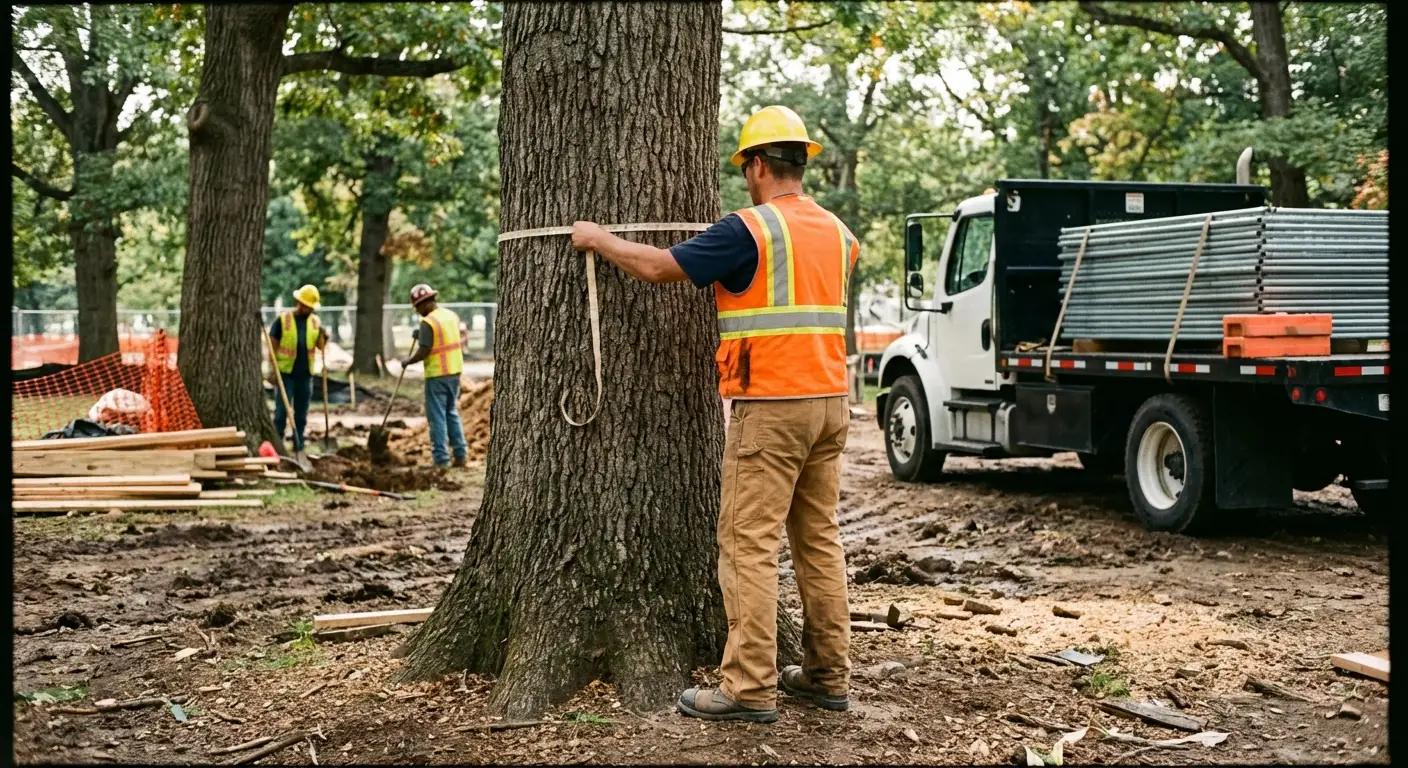
TPZ Root Zone Compliance Specifications
Technical requirements for determining Tree Protection Zone boundaries near the Natural Parkland Trailhead to ensure compliance with local arboricultural standards.
| TPZ Perimeter Calculation Method | Critical Root Zone (CRZ) Radius |
|---|---|
| Post Installation Depth | $45-$65 per post |
| Soil Stability Assessment | $150-$250 per site |
| Root Protection Barrier Material | $12-$18 per linear foot |
| Highland Precipitation Buffer | 6.3in annual average |
| Fencing Material Cost | $300-$550 per panel |
| Signage Interval | Every 30 linear feet |
Root Zone Calculation for TPZ Fencing Compliance
Precise zone measurements protect construction sites in San Bernardino County infrastructure projects.
Common Mistakes in Root Zone Calculation for TPZ Fencing
Root zone calculation for Tree Protection Zone (TPZ) fencing demands precision to protect Highland’s mature trees properly. Avoid these common errors that risk compliance and site safety.
Underestimating the Root Zone Radius
Misjudging the root zone radius often leads to fencing that allows damage to vital roots, risking tree health and violating local protection standards.
Measure tree diameter at breast height and multiply by the required factor to define a compliant root zone radius precisely.
Ignoring Soil Type and Condition
Calculations neglecting soil compaction, moisture, or type can produce ineffective fencing boundaries, increasing root damage risks during construction.
Assess soil conditions onsite and adjust root zone boundaries accordingly to ensure fencing placement protects critical root areas.
Placing Fencing Too Close to Tree Trunks
Fencing installed near trunks stresses root systems and trunk flare, causing long-term tree decline and regulatory noncompliance.
Set fencing at least the TPZ radius away from trunks, considering canopy drip lines and root spread for full protection.
Failing to Account for Site Topography
Ignoring slopes or drainage patterns leads to root zone miscalculations, exposing roots to erosion or water stress during construction.
Include topographic factors in root zone layout to maintain fencing effectiveness and tree health throughout the project.
Not Updating Calculations After Tree Removal or Change
Failing to revise root zone measurements after tree loss or site changes causes outdated fencing that no longer complies with protection requirements.
Reassess and adjust TPZ fencing whenever site conditions or tree inventory changes to maintain compliance.
Root Zone Calculation for TPZ Fencing: Highland Compliance, Built In
We treat every temporary perimeter like it’s permanent—because what’s at stake matters. In Highland, where post-war builds meet mature trees and civic growth, getting root zone calculations right protects both compliance and community character. Mando’s crew measures twice, anchors smart, and never treats soil as an afterthought. When it absolutely has to be up, fast and secure, precision isn’t optional—it’s how we show up.
-
Soil Type Dictates Base Depth
Highland’s mix of sandy loam and compacted fill from post-war development requires adjusted root zone depths. We assess on-site conditions before finalizing TPZ fence placement to ensure stability without over-engineering.In PracticeIn Stonewood, where soil compaction varies block to block, we use steel bases on unstable patches but switch to concrete where native soil holds firm.
-
Wind Load Drives Structural Response
With 111 days above 90°F and frequent afternoon gusts funneling through the San Bernardino foothills, our TPZ setups prioritize wind-load resistance. Panels are anchored to withstand sustained pressure without compromising tree root zones.In PracticeNear Highland Town Center, we pair wind-load-resistant panels with steel bases during summer installations.
-
Root Zone Boundaries Are Non-Negotiable
California’s tree protection ordinances require precise measurement from trunk to drip line. We map protected zones before any post placement, especially around heritage oaks near The Stone House and older neighborhoods like Cypress.In PracticeDuring a TPZ job in Cypress, we rerouted fencing 8 feet outward to honor a mature sycamore’s root spread, using tree protection zone rentals for buffer compliance.
-
Modularity Enables Precision Compliance
Temporary perimeter zoning demands adaptability. Our interlocking system allows micro-adjustments along irregular root zones without gaps or trip hazards, critical in Highland’s established areas with mature landscaping.In PracticeIn Stonewood, we used modular reconfiguration and zero-trip-hazard bases to wrap a TPZ fence around three protected trees on one lot.
Base Line Temp Fence aligns every TPZ installation with OSHA safety standards, California tree protection ordinances, and Highland’s specific environmental conditions—no shortcuts, no guesswork.
Root Zone Compliance FAQs
Field-tested methods for meeting Highland TPZ fencing regulations in varied soil conditions.
How is root zone calculated for TPZ fencing in Lankershim?
Measure from trunk to dripline, add 1ft per inch of trunk diameter. Highland clay soils require 18" minimum depth for post stability.
What spacing meets Cypress neighborhood TPZ rules?
Posts every 8ft with double rails for oaks. San Manuel Village inspections require 6x6 treated posts in flood zones.
Does Highland Town Center allow metal TPZ fencing?
Only powder-coated steel with 2" clearance from trunks. Pine roots need 30" radius protection per CA Urban Forestry standards.
How deep to dig near mature palms in Highland?
18" minimum to avoid frond root damage. Use air spade for verification where utility lines cross TPZ boundaries.
Can I use concrete footings in San Manuel Village?
Only for non-organic fences with gravel drainage collars. Inspectors check for 12" separation from citrus tree feeder roots.
What TPZ materials pass Highland winter inspections?
Pressure-treated pine or steel with expansion joints. Frost heave requires 10" diameter footings for corner posts in clay.
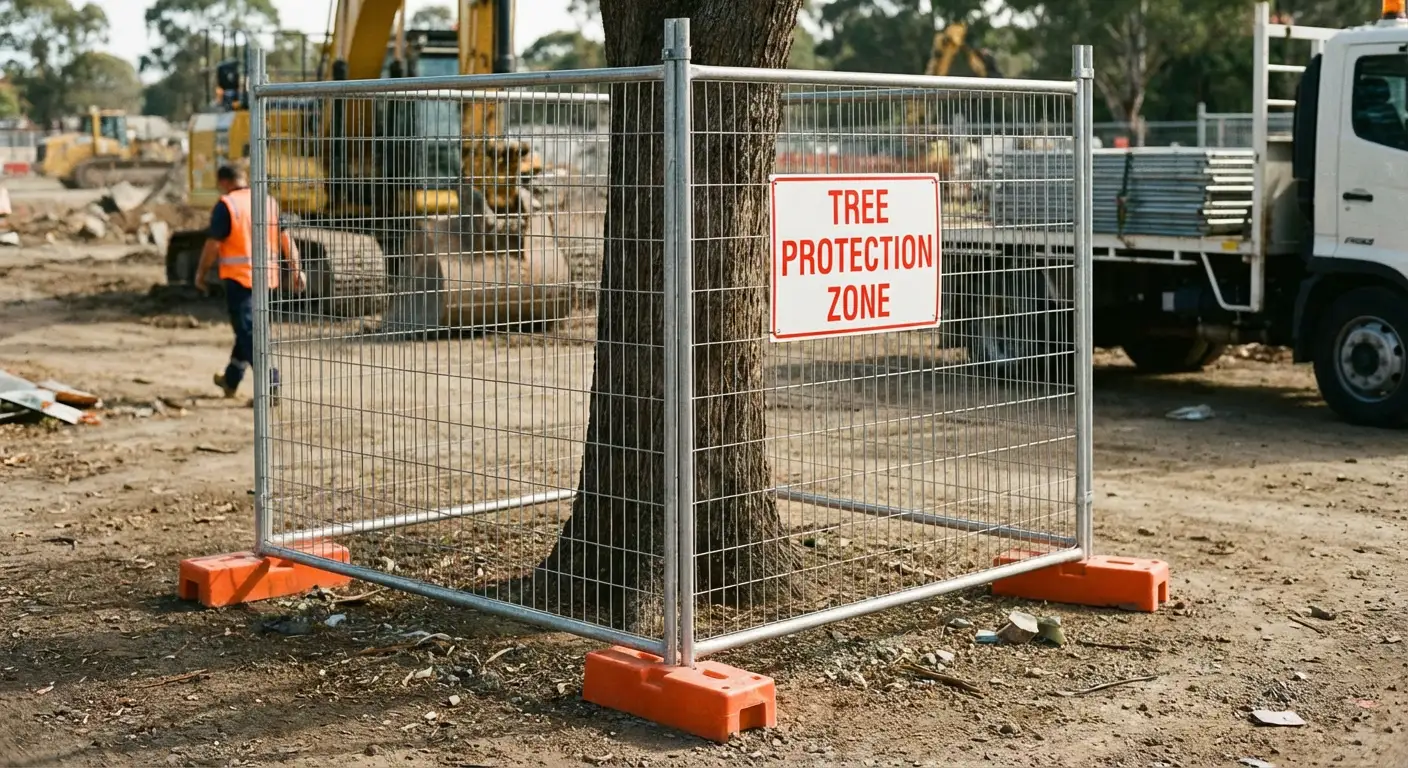
Calculate TPZ Root Zone Fencing Compliance Requirements
Ensure site safety and regulatory adherence for Highland construction projects through accurate root zone measurements and perimeter fence planning.
Serving construction sites throughout the Highland California region