
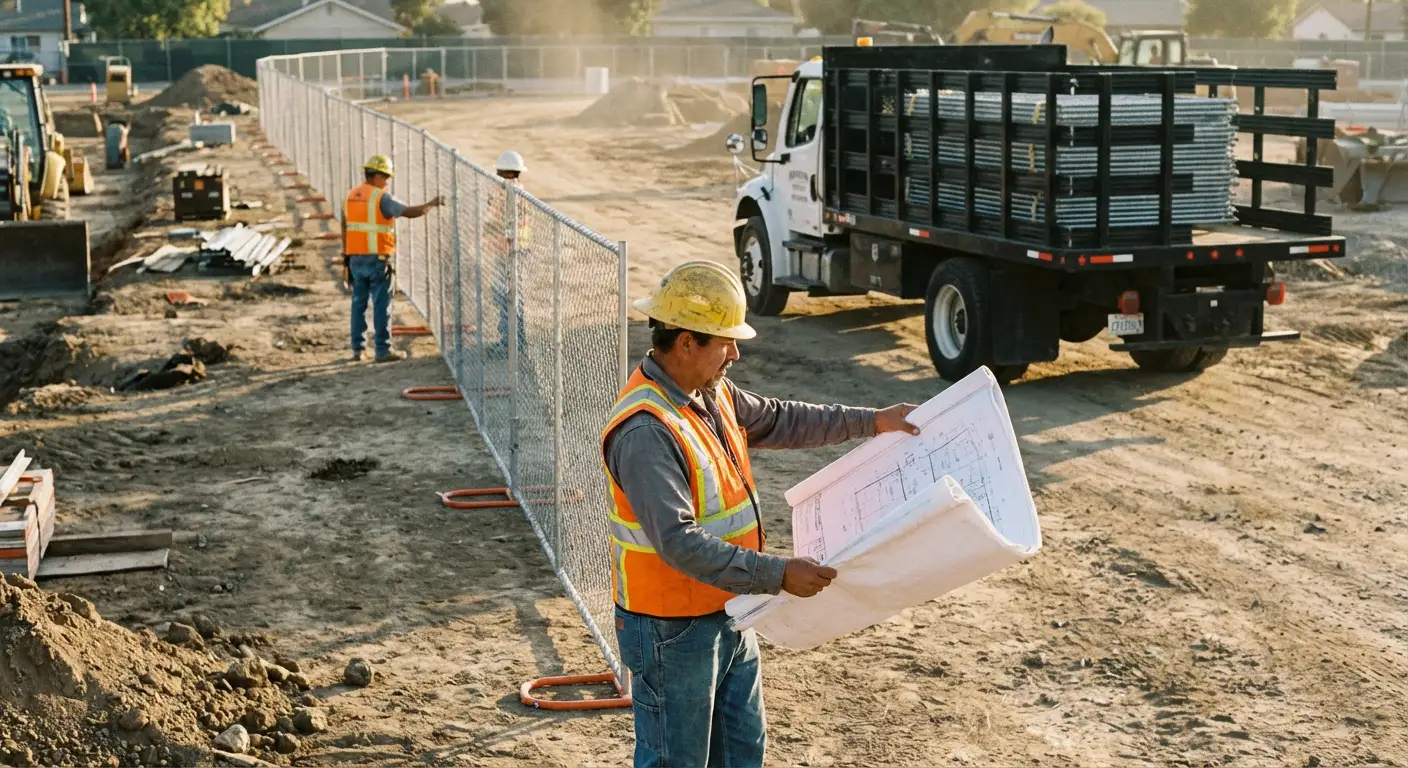
post-driven-fencing

Post-Driven Temporary Fencing in Highland

Post-driven temporary fencing installed across Highland neighborhoods offers secure, non-permanent perimeter control suited to local soil, climate, and development patterns.

Post-Driven Stability in Highland Soils

Posts driven directly into Highland’s compacted soils provide secure anchoring for temporary fencing near San Manuel Village without concrete footings.

Heat-Resistant Panel Installation

Panels installed in Cypress withstand Highland’s 111 days above 90°F without warping, using UV-stabilized materials compliant with OSHA site requirements.

Rapid Deployment in Established Areas

Fencing deployed quickly in Lankershim’s post-1950 residential zones where underground utilities limit excavation depth and access is constrained.

Flood-Zone Appropriate Setup

Elevated base clearance meets Highland’s low flood zone standards, allowing water flow during rare heavy rains near Highland Town Center.

Warning Signs Your Post-Driven Temporary Fence Needs Attention

When a post-driven temporary fence starts leaning, rattling, or opening up at the bottom, we know the wind’s already found a weak point. In Highland, we watch for that early so the line stays secure around active sites, sidewalks, and traffic.

  • The panels start leaning after a windy afternoon in Highland Town Center.

    High

    Diagnosis

    When we see a line of post-driven panels tilting, the soil around the posts has usually loosened or the wind load’s beating the fence harder than the layout can handle. In Highland, those hot, dry stretches and the 111 days over 90F dry out the ground fast, so a fence that looked fine in the morning can shift by sundown. We treat that as a setup problem, not just a cosmetic one.

    Required Action

    We’d reset the posts, check the base depth, and tighten the run before the next gust hits.

  • The fence racks back and forth near open lots in Cypress.

    High

    Diagnosis

    That side-to-side flex tells us the fence isn’t transferring wind loads into the posts the way it should. I’ve seen this happen when temporary fencing sits too close to a hard wind corridor or when the bracing pattern gets skipped. In this climate, with long dry spells and gusty afternoons, that movement gets worse fast and turns into a blow-over risk.

    Required Action

    We’d add wind-load resistance features, rework the spacing, and anchor the posts more aggressively.

  • The bottom of the fence starts lifting and leaving gaps along Stonewood sidewalks.

    Medium

    Diagnosis

    Once the bottom edge lifts, the whole run loses bite against the ground. On post-driven temporary fencing, that gap usually points to uneven grade, loose post seating, or a layout that didn’t account for sidewalk crown and settlement. I’ve watched that small gap turn into a bigger swing point when a north breeze catches it.

    Required Action

    We’d re-seat the posts, check grade contact, and close the opening before debris or feet get under it.

  • Panels keep shifting after crews move equipment through the gate.

    High

    Diagnosis

    When access points take repeated hits from carts, compressors, or loaded trucks, the fence line starts working loose at the connections. We see that a lot on post-war sites where the temporary layout has to fit narrow drives and active trades. If the gate or panel connection keeps drifting, the whole system starts walking out of alignment.

    Required Action

    We’d inspect the connections, reset the gate area, and use heavier hardware around the traffic point.

  • The posts wobble after rain runoff or wash water pools near the line.

    High

    Diagnosis

    Even with Highland’s low flood risk and modest yearly rainfall, pooled water can soften the soil around a driven post and kill stability. We pay close attention to that because a wet base doesn’t hold tension the same way a dry one does. Once the post starts rocking, the panel load shifts and the fence gets easier to tip.

    Required Action

    We’d check the drainage, drive the posts deeper if needed, and move the line out of the wet spot.

  • The fence makes a loud slap or pop when the wind comes through the Historic District corridor.

    Medium

    Diagnosis

    That sound usually means the fence fabric is moving against loose connections or the post spacing doesn’t match the wind exposure. Around the Highland Historic District, older streets and open corners can funnel air in a way people don’t expect. We listen for that noise because it tells us the fence isn’t staying settled under load.

    Required Action

    We’d tighten the run, check the post spacing, and add support where the wind hits hardest.

Speak directly with a site safety coordinator.

Post-Driven Temporary Fencing in Highland, CA

Secure your site with durable post-driven fencing solutions.

Post-Driven Temporary Fencing Pricing

Estimated Range
$350-$650/week

Pricing varies by fence height, length, and site conditions in Highland neighborhoods.

Prices exclude permits and specialized site preparation. Compliance with OSHA standards maintained.

What's Included

  • Post-driven steel fence posts securely installed into the ground
  • Temporary chain link or mesh fencing panels attached to posts
  • Standard height options ranging from 4 to 8 feet
  • Basic installation and removal services within Highland, CA

Cost Factors

Fence height

Taller fences require more materials and labor, increasing costs

Fence length

Longer runs need more posts and panels, affecting overall pricing

Soil conditions

Rocky or compacted soil in Stonewood may require extra effort for post driving

Access to site

Limited access near Highland Crossing can impact installation time and cost

Contact Base Line Temp Fence

Call (909) 257-8597 for detailed pricing and availability in Highland, CA.

Call (909) 257-8597

Installation meets local safety regulations and is performed by qualified technicians.

Technical Definition

Post-driven temporary fencing utilizes mechanical post drivers to embed steel rails into the earth. This method secures boundaries in Highland Town Center commercial zones and near the Highland Historic District. Field crews manage soil density and fence blow-over prevention to counter Highland's 111 days above 90F. Operators must account for:

Simplified Explanation

Post-driven fencing involves driving metal stakes into the ground to support chain-link panels. This method works for job sites in Cypress or Stonewood where permanent foundations are not feasible. It provides a physical barrier for construction or events without damaging the underlying soil or local utility lines.

Related Terminology

Wind Load Resistance
:
Structural capacity to withstand gusts common in Highland, CA.
Interlocking Hooks
:
Mechanical fasteners used to secure panels between driven posts.
Dust Control Mesh
:
Fabric screening required for SWPPP dust compliance on sites.
Zero Trip Hazard
:
Installation method ensuring ground-level stability for pedestrian safety.
Modular Reconfiguration
:
Ability to adjust fence layout based on changing site footprints.
Temporary Gates
:
Mobile entry points integrated into the post-driven fence line.
Post-driven fencing installation site in Highland, CA
Step-by-Step Fence Installation

Post-Driven Temporary Fencing Done Right

Quick, secure fencing installation tailored for Highland’s unique climate and terrain.

How We Install Post-Driven Temporary Fencing

Our process tackles Highland’s soil and weather challenges, providing tough, reliable temporary fencing fast and secure.

1

Site Assessment and Planning

We inspect the Highland site, noting soil firmness and layout, ensuring posts fit securely without damaging nearby historic structures.
2

Post-Driving Setup

Our crew drives sturdy metal posts into the ground using pneumatic tools, adapting to soil conditions to stabilize fencing quickly and firmly.
3

Panel Attachment and Securing

Fence panels attach to posts with heavy-duty clamps, adjusted to maintain alignment, ensuring a secure barrier that holds under Highland’s wind and weather.
4

We Remove & Restore

Once your project wraps, call us and we’ll pull every post and fill the voids. We aim to clear the site within 48 hours of your request, leaving the ground ready for the next phase of development.

Secure Post-Driven Fencing for Highland Job Sites

When we're installing post-driven temporary fencing in Highland's Cypress neighborhood or near the Natural Parkland Trailhead, we're battling two things - that dry inland wind and loose decomposed granite soil. Our crew uses 1-1/4" steel posts driven 24" deep with a hydraulic pounder, spacing them every 6 feet for what we call 'desert tight' security. Unlike concrete bases, this method grips immediately - crucial when afternoon gusts hit 35mph off the foothills. We've secured everything from Stonewood housing developments to Highland Historic District renovation sites this way. The key is our wind-rated interlocking hooks that won't pop loose when the Santa Anas blow through.

Installation Requirements

  • Post-driven fencing anchors directly into soil for stability
  • Ideal for sites with uneven terrain or loose topsoil
  • Works with all standard chain-link panel heights
  • No concrete curing delays - install and secure same day
  • Meets OSHA visibility requirements for construction zones
Installation Factor|Highland Adaptation Post Depth|24" minimum (vs standard 18") Soil Prep|Wetting dry zones for better compaction Wind Rating|35mph sustained (tested at Redlands Yard) Removal|Extraction tool prevents ground disturbance

Trusted Post-Driven Temporary Fencing in Highland, CA

We needed solid, fast fencing around a new build near Highland Town Center. Mando's crew showed up with heavy-duty post-driven panels that went in deep and stayed put despite the afternoon gusts. I was impressed how they set everything so quick, no wobbling or shifting. That steady setup made our site safe, even with those hot 90-plus days. These guys know their stuff.

Lisa, Project Manager

Post-Driven Temporary Fencing

Working in the Cypress neighborhood means dealing with unpredictable weather and tricky soil. Mando’s post-driven fences held firm through a sudden rainstorm that left other sites scrambling. They use the right equipment and make sure every post is anchored solid, which made a big difference when the ground got soft. The team’s attention to detail really takes the stress off managing the site perimeter.

Carlos, Site Supervisor

Post-Driven Temporary Fencing

I’ve hired Base Line Temp Fence multiple times around Stonewood for different projects. What stands out is how their post-driven fencing handles all the heat and wind we get here without budging. The Stone House project needed fast, secure fencing, and Mando’s crew delivered exactly that, setting everything up within hours. Their knowledge of local conditions shows in the durability of the setup.

Jenna, Construction Foreman

Post-Driven Temporary Fencing

Post-Driven Temporary Fencing in Highland, CA — Part 2

Secure posts and panels for sites, events, and access control.

Post-Driven Fencing Built for Highland's Unique Challenges

After securing hundreds of sites from the Village to Lankershim, we know temporary fencing isn't just about panels—it's about anticipating how Highland's climate and terrain will test them. Our crews train specifically for the mix of historic district wind tunnels, modern development soils, and sudden Santa Ana gusts. Every post gets driven with local knowledge you won't find from out-of-town operators.

  • 1

    Localized Wind Knowledge

    We've learned Highland's wind patterns over 15 years, especially in the Historic District where gusts funnel between buildings.

    Real World Example

    Doubling posts near Immanuel Baptist Church's open plaza.

  • 2

    Heat-Adapted Materials

    Our galvanized steel posts resist warping during those 111 scorching days, unlike cheaper aluminum some competitors use.

    Real World Example

    Pre-drilling holes prevents metal fatigue in 90°F+ temps.

  • 3

    Flood-Responsive Setup

    Though flooding's rare, we angle panels for drainage in case those 6.3 inches come fast during monsoon season.

    Real World Example

    Elevating gates 1" in Lankershim's low spots.

  • 4

    Substrate-Specific Installation

    1950s-80s construction means we encounter everything from decomposed granite to clay—we match post drivers accordingly.

    Real World Example

    Using rock bars for compacted soils near Town Center.

When your site security can't afford learning curves.

Post-Driven Temporary Fencing Operations

Field technicians manage post-driven installations across Highland, addressing soil stability and local climate factors for secure site perimeters.

How do post-driven fences handle Highland heat?

Highland temperatures exceed 90F for 111 days annually. We drive steel posts deep into the soil to prevent warping near the Highland Town Center. This method resists thermal expansion common in the Inland Empire climate.

What happens during heavy rain in the Highland Historic District?

Low flood zone designations near the Highland Historic District require secure post placement. We drive posts past the soft topsoil layer to ensure stability when the 6.3in annual precipitation saturates the ground.

Are these fences suitable for post-war residential sites?

Properties featuring 1950-1980 common construction in Lankershim often have established root systems. Post-driven methods allow for site perimeter marking without the heavy concrete footings used in permanent installations near these older homes.

Does OSHA impact post-driven fence installation?

OSHA regulations dictate specific fence heights and stability for job sites near Immanuel Baptist Church. We drive posts to specific depths to meet safety standards for pedestrian protection in high-traffic institutional zones.

How do wind gusts affect the fence line?

Wind loads near the Highland Town Center require tight post spacing. We use driven steel to prevent leaning when high-velocity gusts hit the chain link mesh during seasonal shifts in the Highland area.

Can post-driven fencing work on uneven terrain?

Terrain variations near Lankershim require adjusting post depth. We drive posts into the grade to maintain a level top rail, even when working on slopes or uneven dirt surfaces common in Highland.

Secure Your Highland Construction Site with Temporary Fencing

Professional post-driven temporary fencing solutions designed to protect job sites, control access, and meet safety regulations for local contractors.

Request Fast Fence Quote

OSHA-compliant fencing installed quickly by experienced San Bernardino County professionals